A cab ride in the UAE
A phone screen, a window full of school banners, and a question about how education makes quality visible.
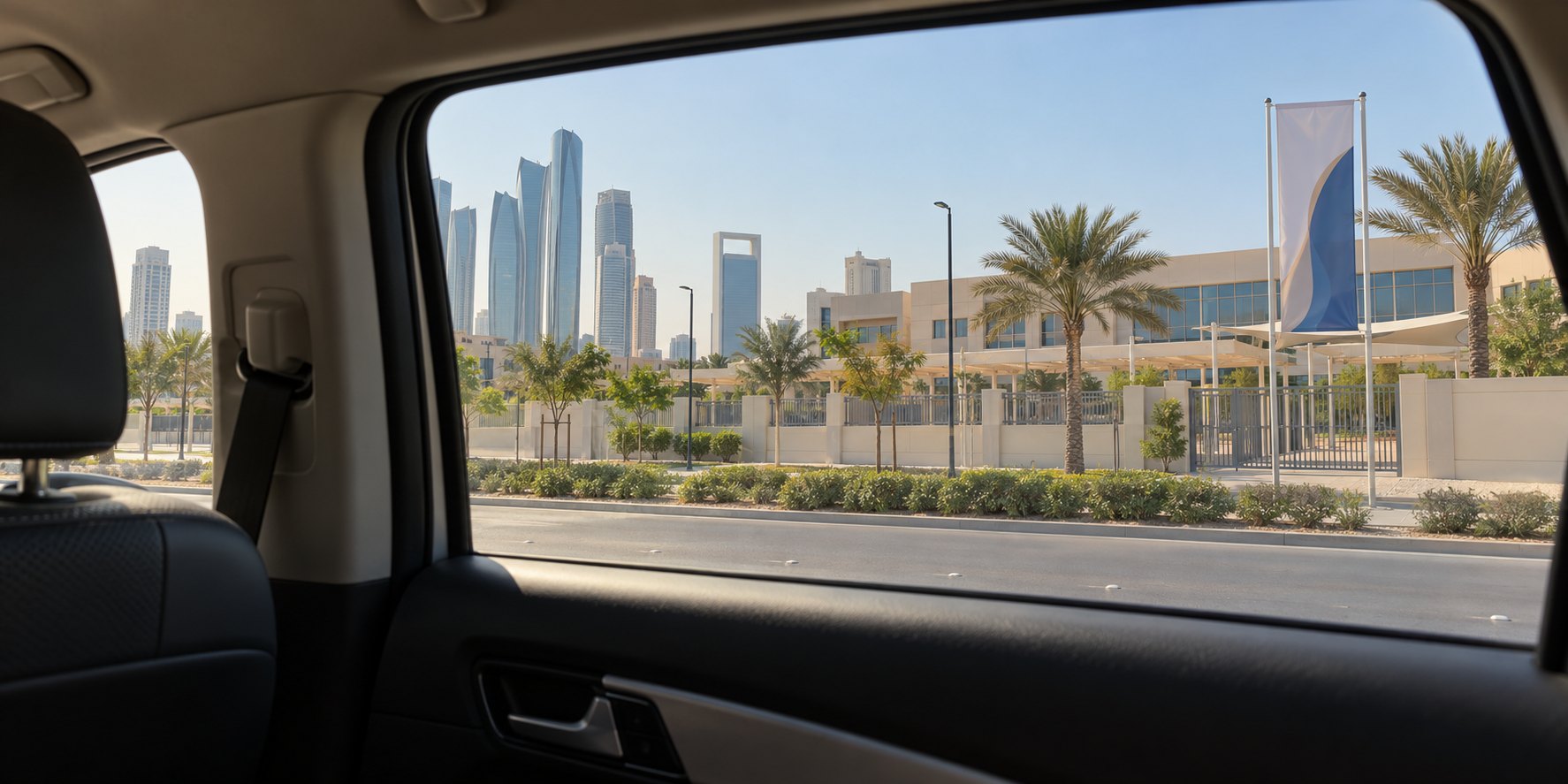
Recently, I was in a cab scrolling through Instagram when I saw an announcement about six schools planned for the next six years. It named Harrow, Rugby, Gordonstoun and King’s College, along with two Epsom schools, one in Abu Dhabi and one in Dubai. I looked up from my phone and saw banners for a school advertising BSO accreditation and a five-star rating. I can’t remember its name.
My immediate reaction was, Here we go again.
The logos, crests, names and colour schemes were instantly familiar. But the buildings in the Gulf school mock-ups were distinctly modern. Some promotional images showed those new campuses, while others showed photographs of the actual UK grounds. In that contrast, I could see British heritage being made visible and sold as a marker of educational value.
It felt like marketisation in international schooling. To me, it was postcolonialism at its sharpest. What happens when one educational tradition is presented as a ready-made commodity for another context?
The paper behind the moment
Since moving to the UAE, my research has felt more immediate. Adam Poole and I recently published our article on stewarding Britishness abroad, heritage and aesthetic legitimacy in Educational Review. We examine how Dulwich, Harrow and Wellington construct and communicate Britishness through their public-facing websites.
Heritage is central to the article. We look at how histories, values, symbols, institutional language and local adaptations are assembled to communicate educational authority across contexts. We develop the idea of heritage stewardship to describe how organisations shape heritage across time and place, and show how this stewardship can produce aesthetic legitimacy.
By aesthetic legitimacy, I mean the credibility and educational value communicated through visible forms such as architecture, crests, uniforms, colour and design. These signs carry cultural meaning. They help shape what viewers recognise as a familiar and desirable educational tradition.
The cab ride brought these questions out of the article and into the city around me. These schools may be good. They may support student achievement. My concern is not that a British curriculum has no place here. It is that we cannot simply implement one in a new context without engaging with local needs, traditions, understandings, UAE culture and the diversity of the people who live here. If we treat Britishness as a package whose value is self-evident, local knowledge and traditions can be pushed to the margins or silenced. This may also reinforce social stratification when affiliation with prestigious British institutions is treated as proof of educational value.
Heritage is not just a set of symbols to reproduce. It is something that changes through relationships with the place where it is carried forward. That makes the question of who gets to define educational value especially important.
What do you see happening in these schools?
Am I right to be concerned that British heritage is being sold as educational value, or am I missing something? Some people may see British education as the best education. If you do, what makes it valuable in this context, and how should it engage with UAE traditions, needs and diversity?
I’m developing the idea of aesthetic legitimacy and would welcome your perspective, whether it supports my concern or challenges it. You can also follow the ongoing conversation about aesthetic legitimacy.